When Can You See Humpback Whales in Madeira?
Humpback whales migrate through Madeira’s waters at specific times. Your best chances to see them are:
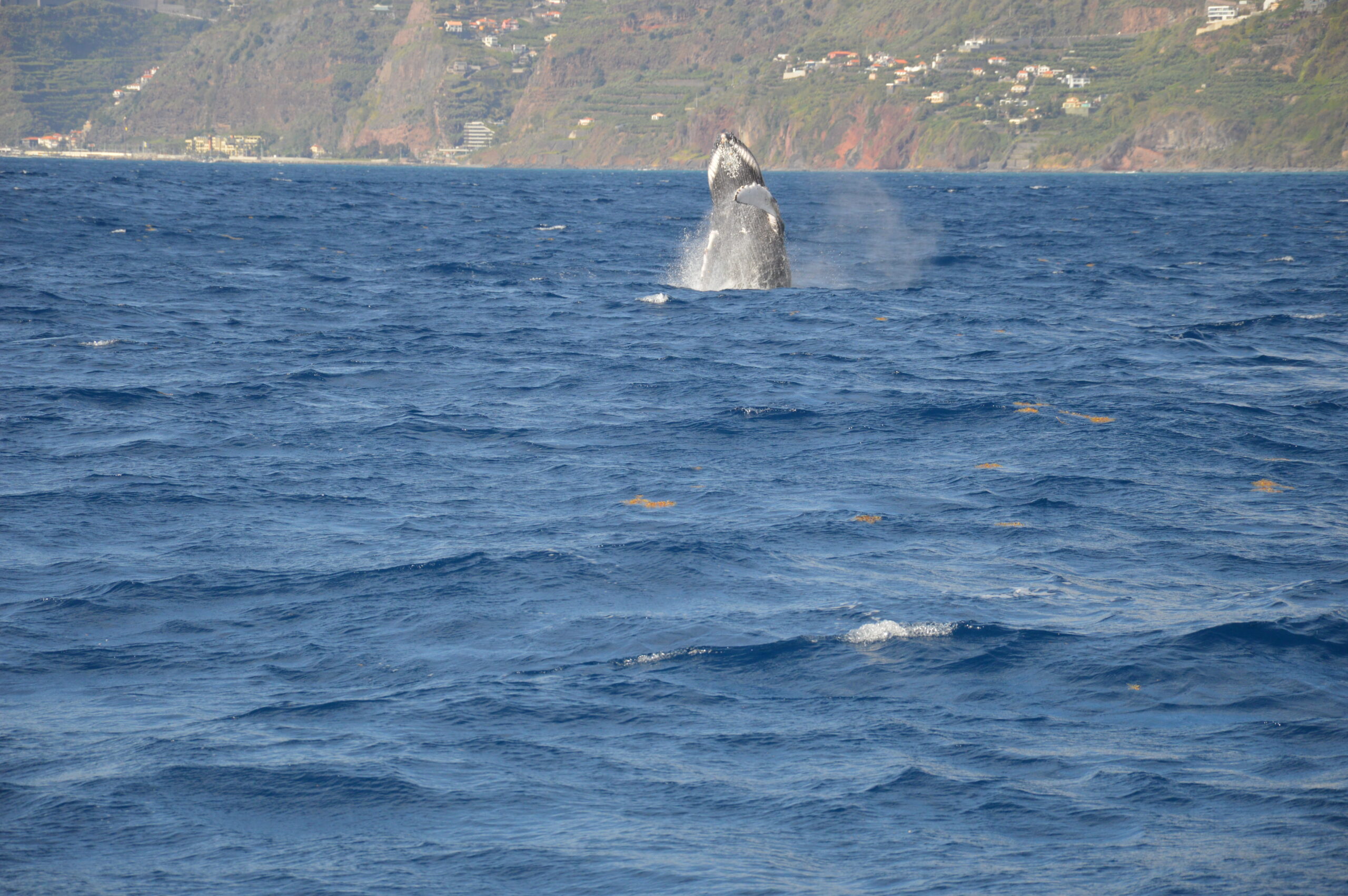
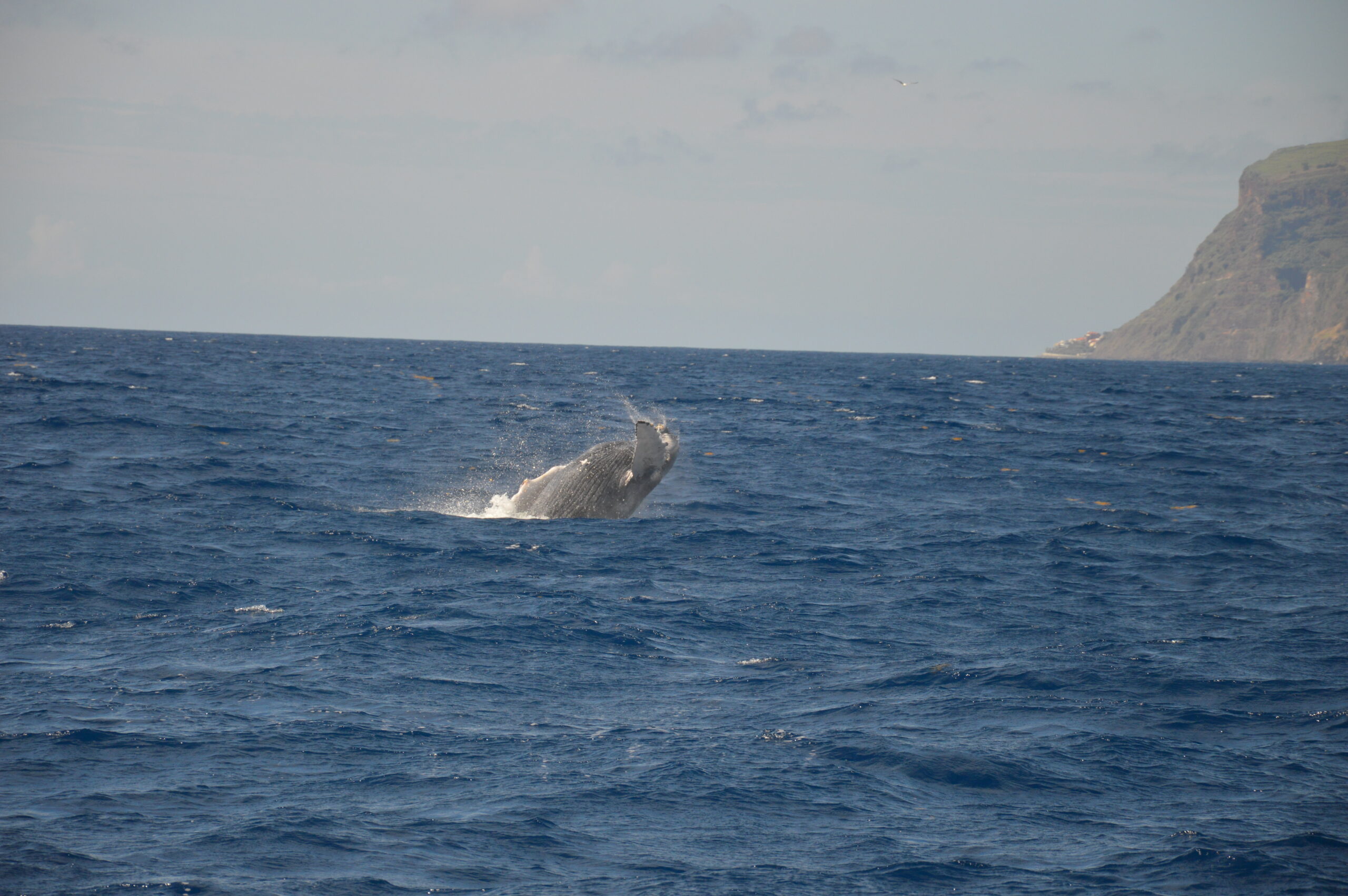
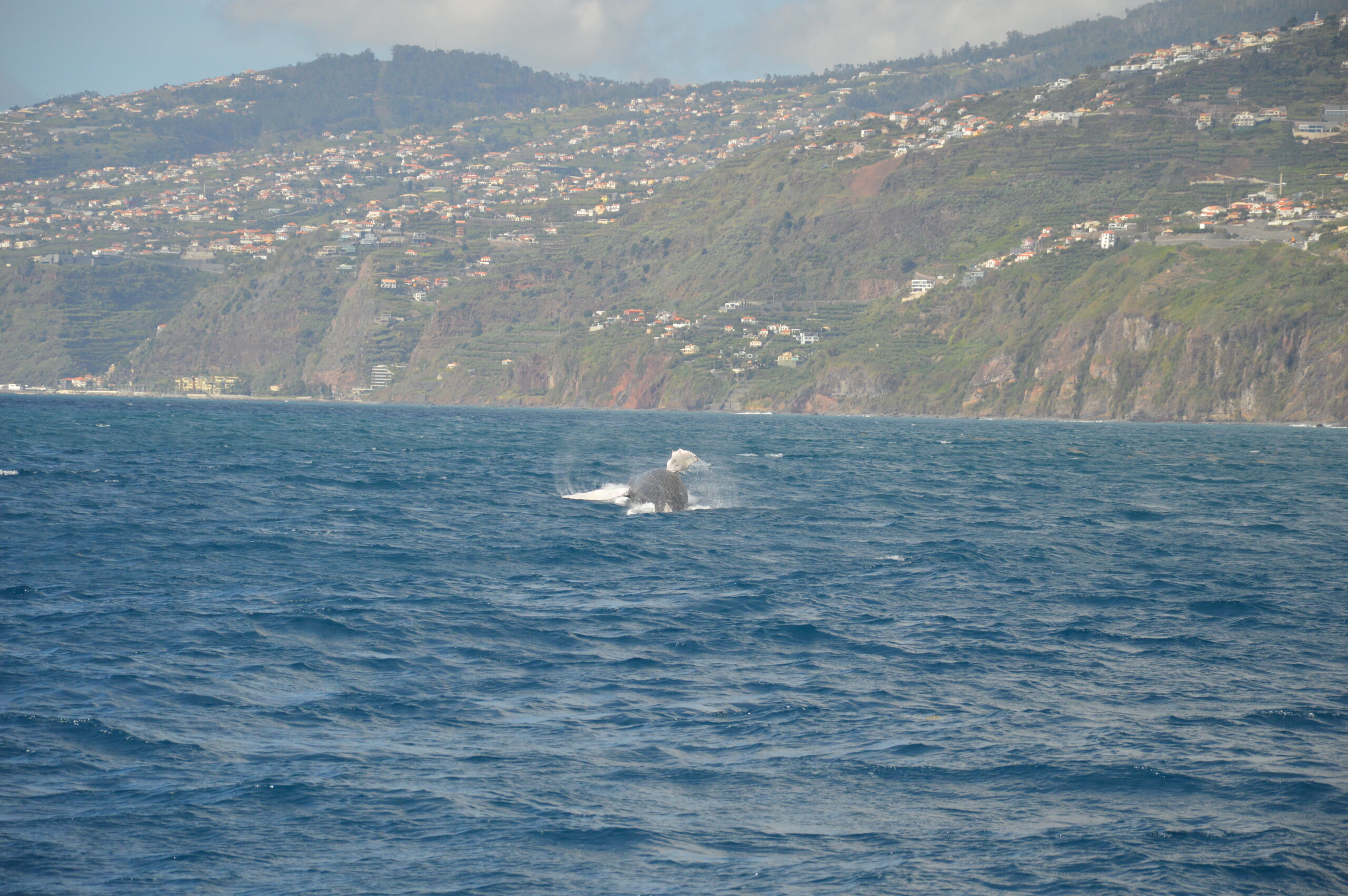
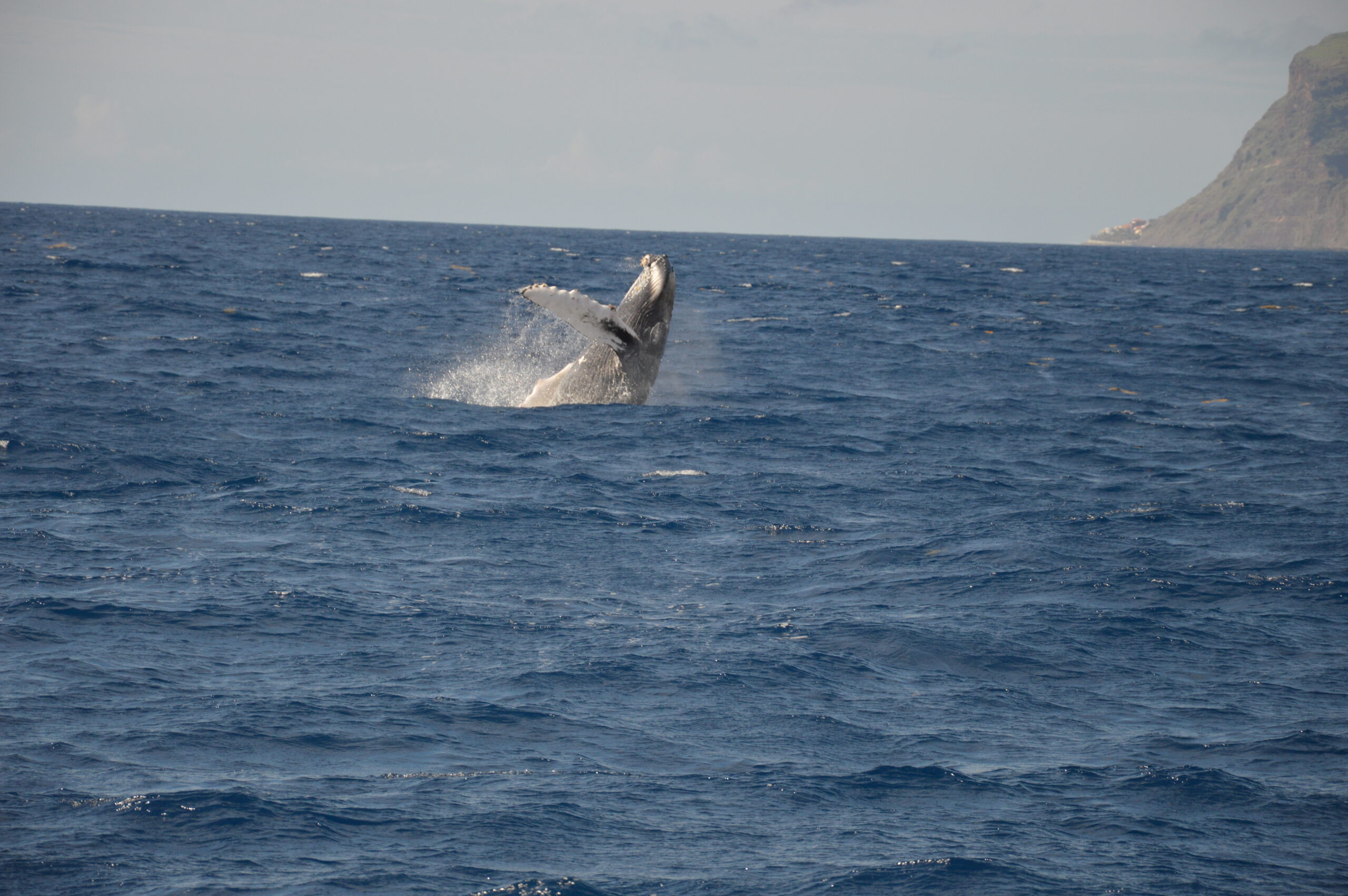
During these periods, observers often watch humpbacks breaching, tail-slapping, or traveling in small groups.
The Behavior of Humpback Whales Around Madeira
Humpback whales are famous for their dramatic surface behaviors and complex vocalizations. In Madeira, you may witness:
- Breaching
- A leap out of the water that showcases the whale’s strength and agility.
- Pectoral Fin Slapping
- Large fin slaps used for communication or play.
- Fluke Displays
- A classic sight as humpbacks lift their tail before diving deep.
- Singing
Primarily performed by males, these songs are more often recorded by hydrophones than heard directly on boats, but their presence indicates active migration.
Whale-Watching in Madeira with Ontales: What to Expect
If you want the best chance to witness humpback whales in Madeira, an Ontales whale-watching tour is a good choice. Ontales operates from a popular coastal hub called Calheta, offering tours guided by experienced marine biologists who know exactly how to track and identify humpbacks during their migration season. Their team uses real-time ocean data, lookout points on land, and communication with spotters to maximize sighting opportunities while maintaining strict respect for wildlife.
Passengers board small, comfortable vessels designed to get close to nature without disturbing it. Ontales places strong emphasis on sustainability, ensuring every encounter happens on the whales’ terms. Throughout the trip, guides share fascinating insights about humpback behavior, migration routes, and conservation efforts surrounding Madeira’s marine ecosystem.
To make the most of your Ontales whale-watching experience, it’s best to:
-
Book a morning tour, when the ocean is usually calm
-
Bring a camera with a good zoom lens
-
Wear layers, as ocean conditions can change quickly
-
Follow the crew’s guidance to ensure safe, respectful wildlife encounters
Conservation: Protecting Humpback Whales Around Madeira
Although humpback whale populations have recovered significantly, they still face threats including noise pollution, ship strikes, plastic waste, and climate change. Madeira’s responsible whale-watching guidelines and research efforts support the long-term protection of migratory species.
Madeira Is a Prime Destination for Humpback Whale Enthusiasts
Whether you’re a wildlife lover or a traveler seeking a once-in-a-lifetime moment, humpback whale watching in Madeira is an unforgettable experience. With strong chances of sightings, unique Atlantic tales, and eco-friendly tour options, Madeira stands out as one of the best whale-watching locations in Europe.
Frequently Asked Questions About Humpback Whales
What is a humpback?
A humpback is a species of baleen whale scientifically known as Megaptera novaeangliae. They are known for their long pectoral fins, acrobatic behavior, complex songs, and globe-spanning migrations.
Does a humpback whale have teeth?
No. Humpback whales do not have teeth. Instead, they have baleen plates, which are comb-like structures made of keratin. These plates allow them to filter small fish and krill from seawater.
What do humpback whales eat?
Humpback whales primarily eat krill, small schooling fish such as herring, anchovies, and sardines, and sometimes planktonic organisms. They often feed using bubble-net techniques to corral prey.
How big do humpback whales get?
Adult humpback whales typically reach 12 to 16 meters (39 to 52 feet) in length. Some exceptional individuals can grow even slightly larger.
How large are humpback whales?
An adult humpback whale can weigh 25 to 40 tons, with females generally growing slightly larger than males.
Where do humpback whales live?
Humpback whales live in all the world’s major oceans. They migrate between cold, nutrient-rich feeding grounds (often near the poles) and warm tropical breeding and calving grounds. Madeira lies along an important migratory route in the Northeast Atlantic.
Are humpback whales dangerous?
Humpback whales are generally not dangerous to humans. They are gentle, non-aggressive animals. However, like all large wildlife, they should be observed from a safe distance to avoid accidental collisions.
Are humpback whales endangered?
Humpback whales are not currently classified as endangered. Most populations have recovered well thanks to international protection. However, some specific regional populations remain vulnerable.
Are humpback whales extinct?
No. Humpback whales are not extinct. Their numbers have significantly recovered since the end of commercial whaling, although continued conservation efforts are essential.