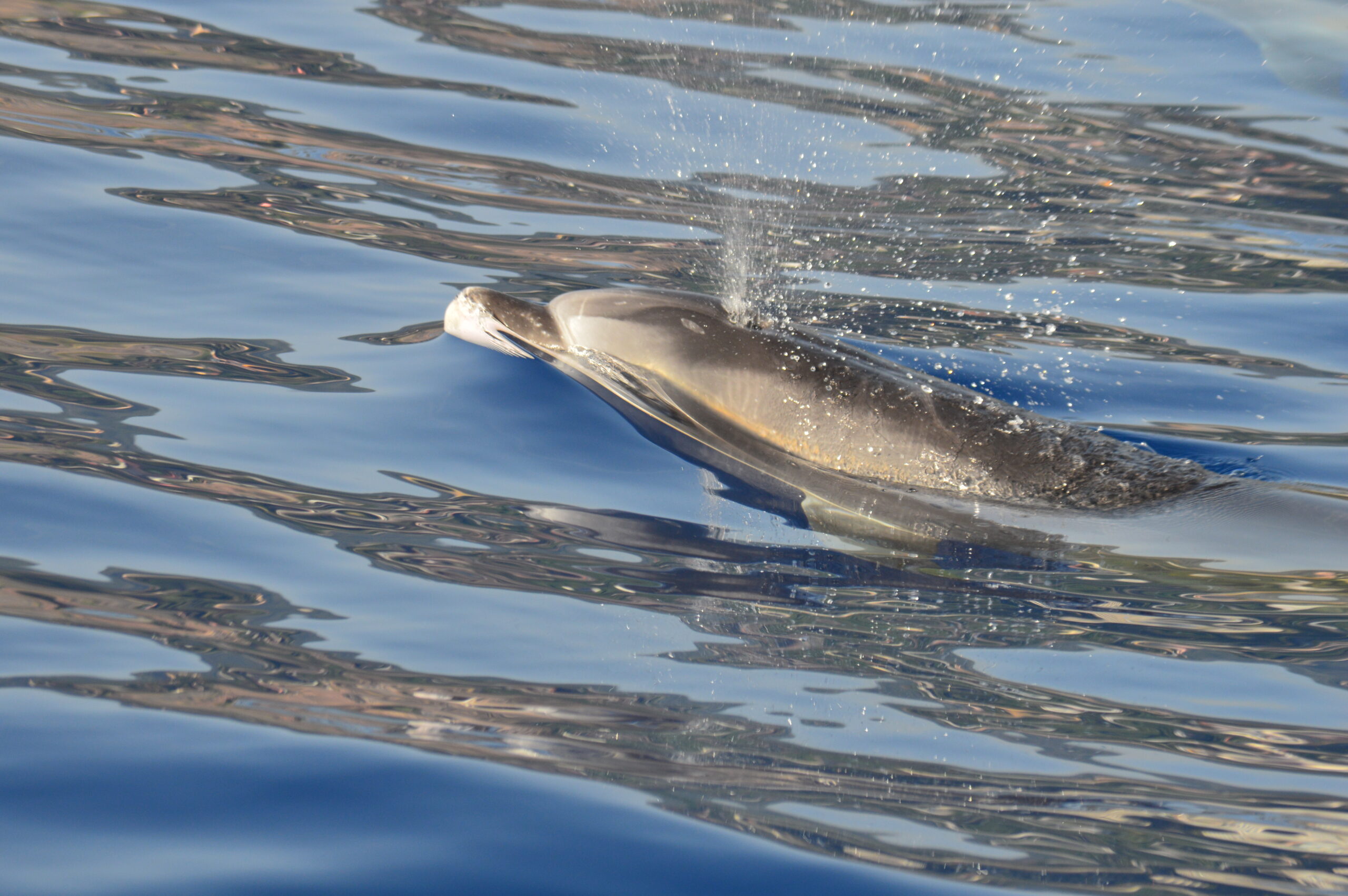
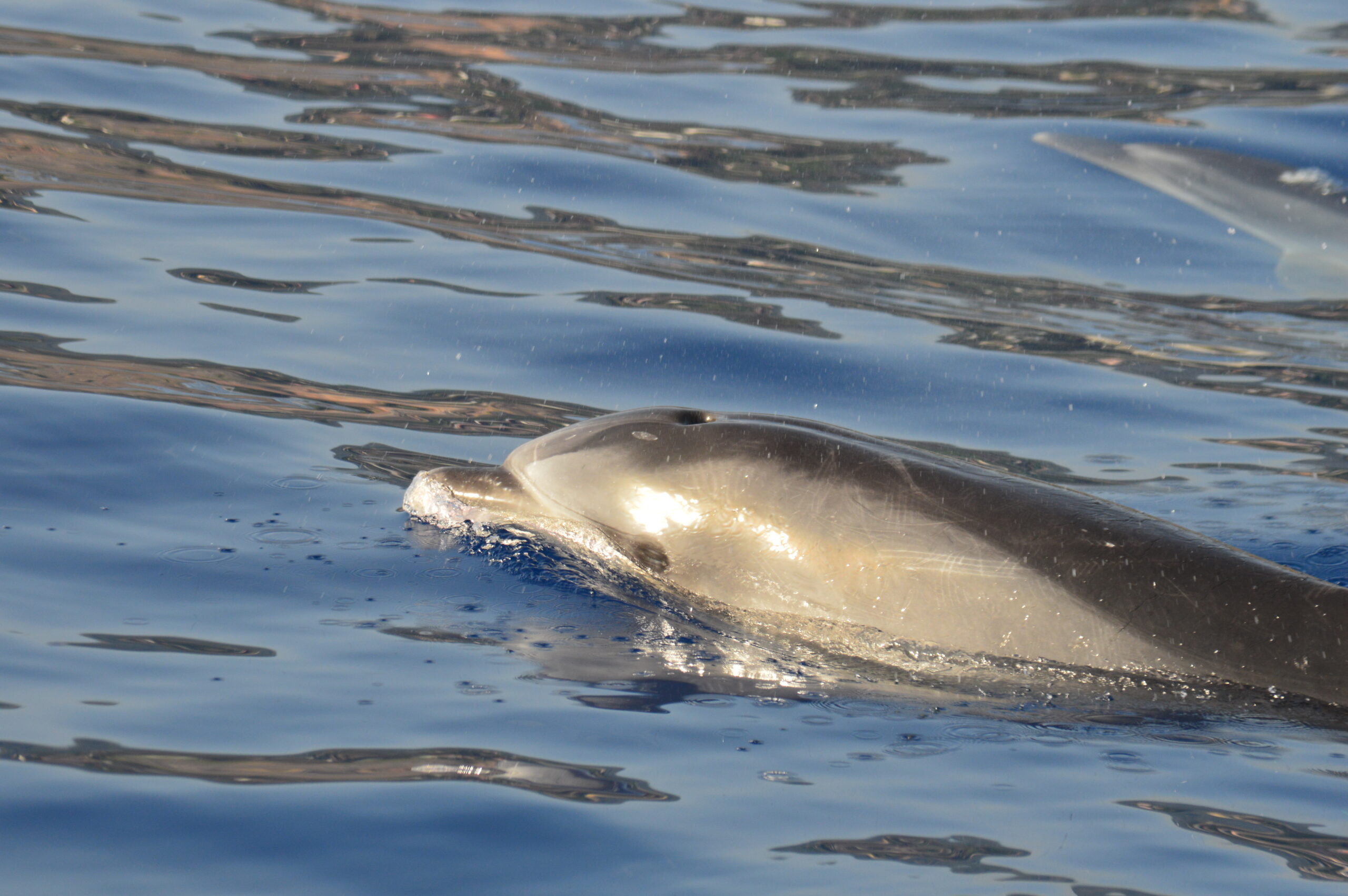
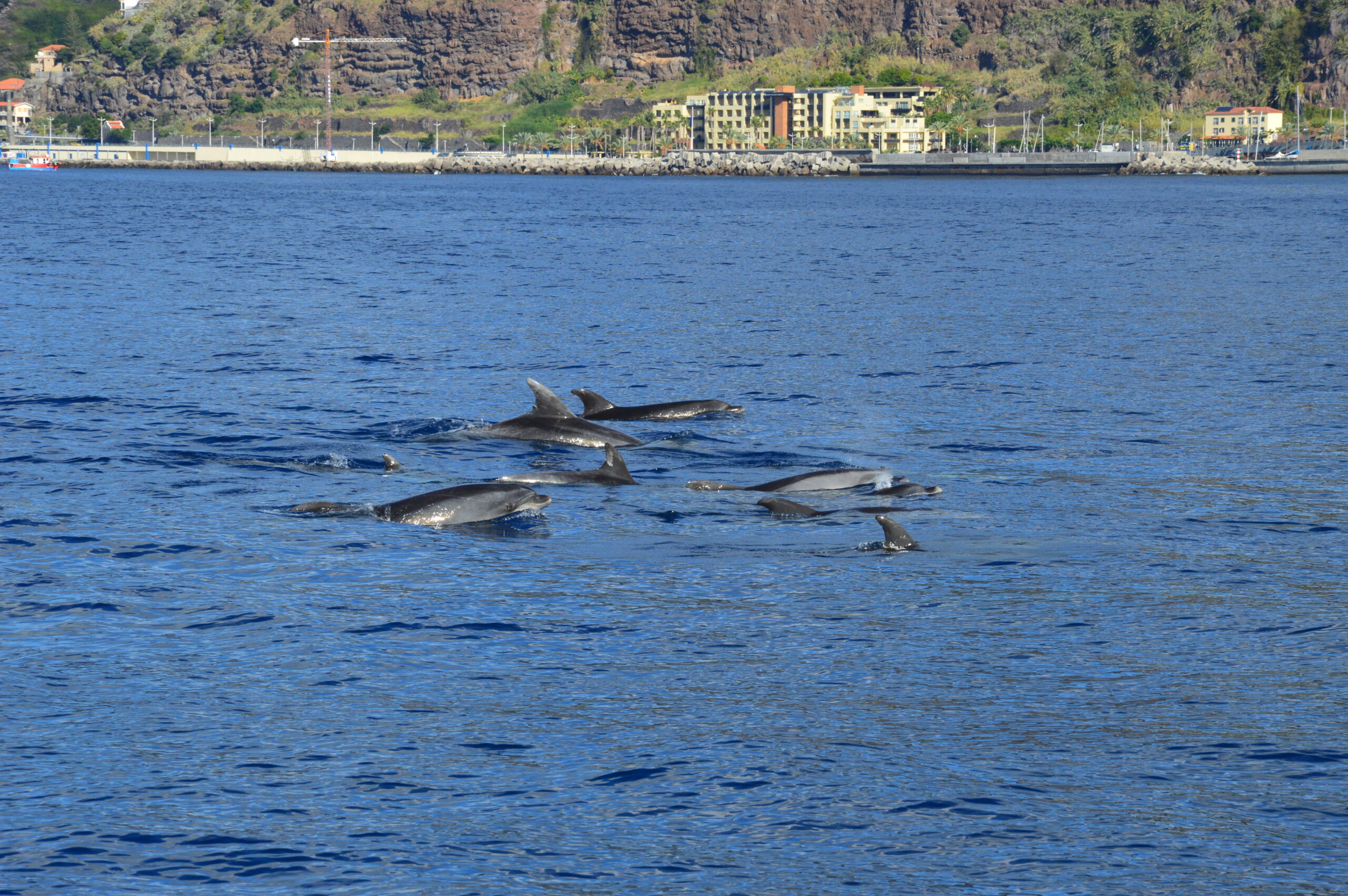
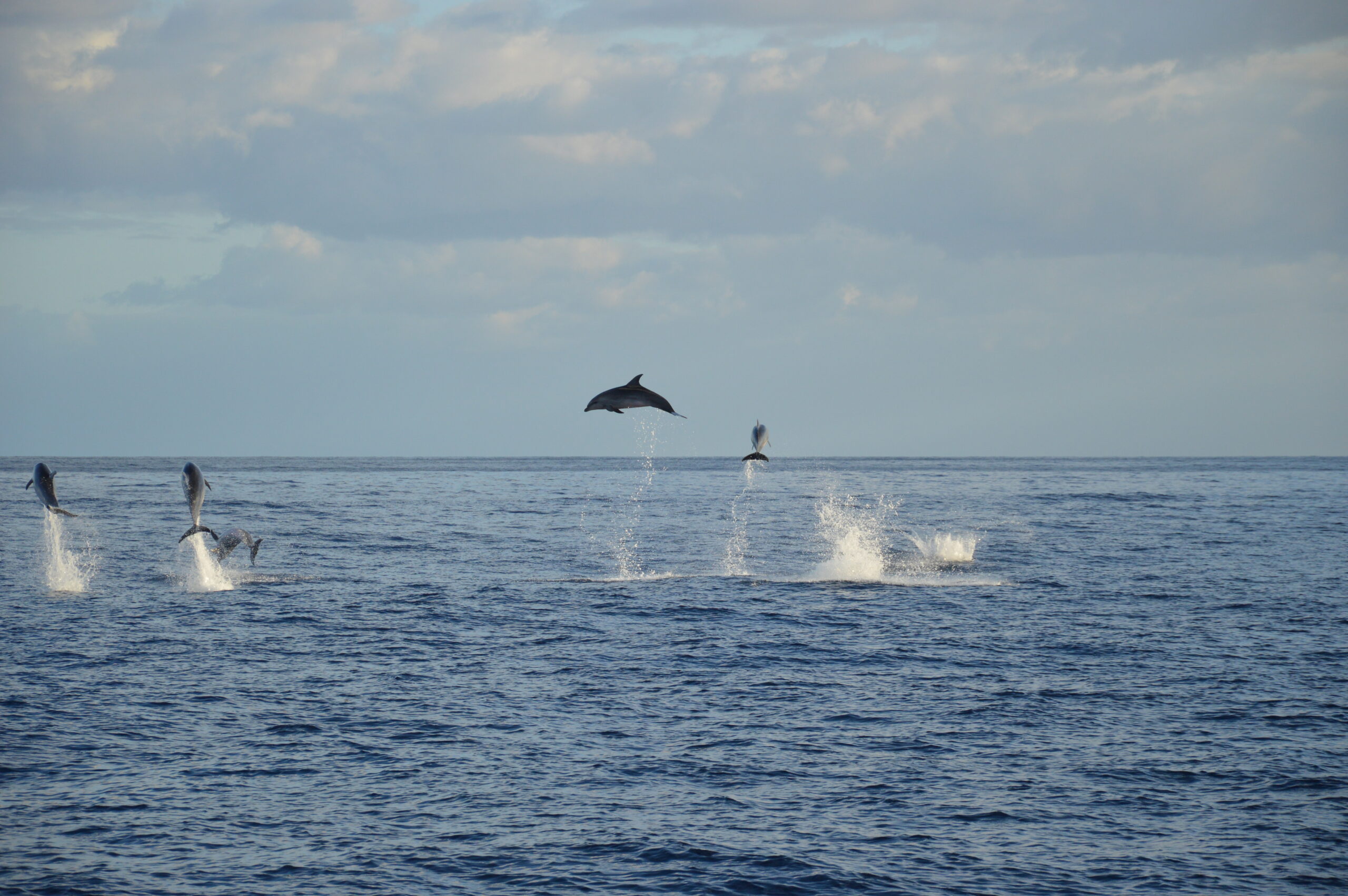
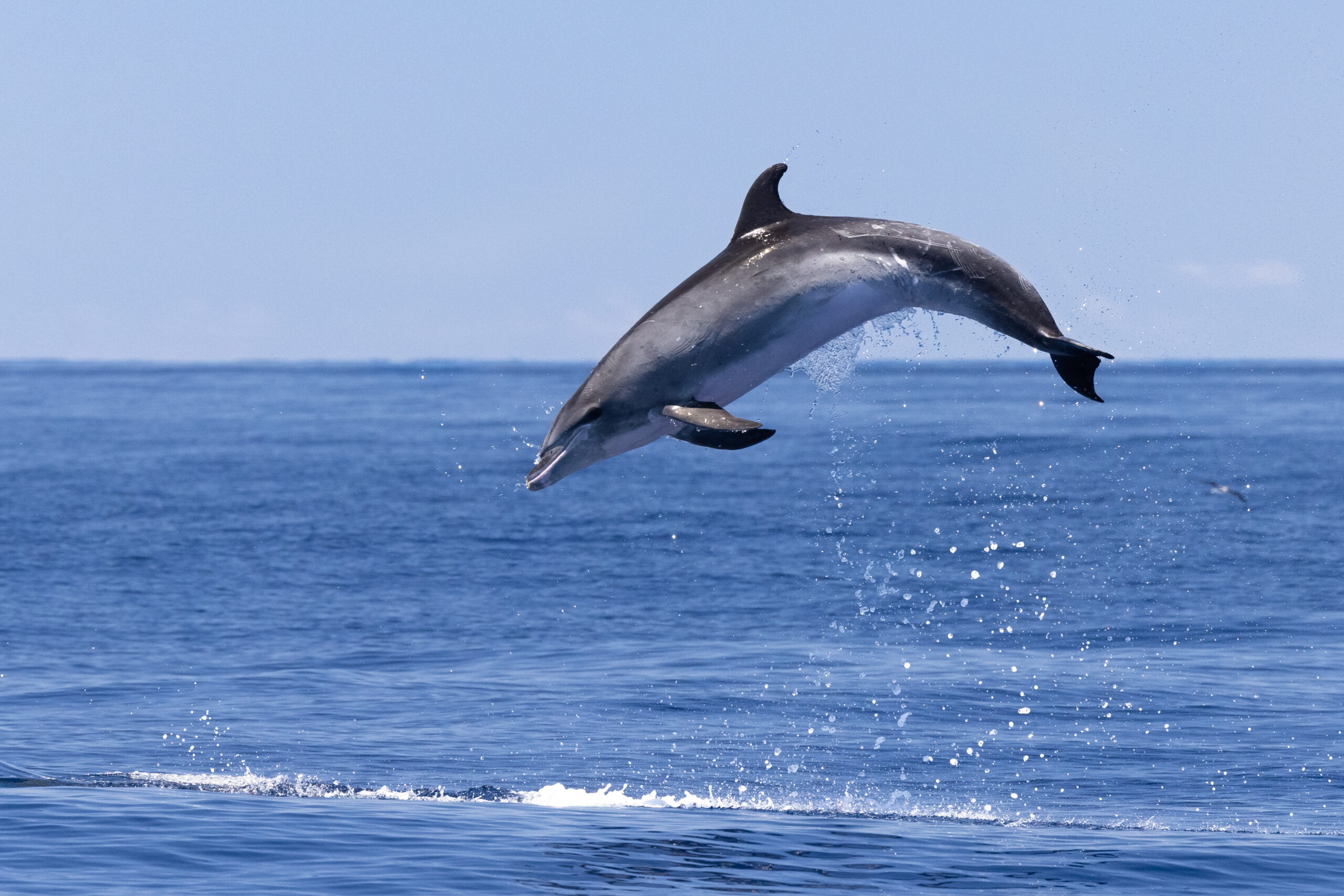
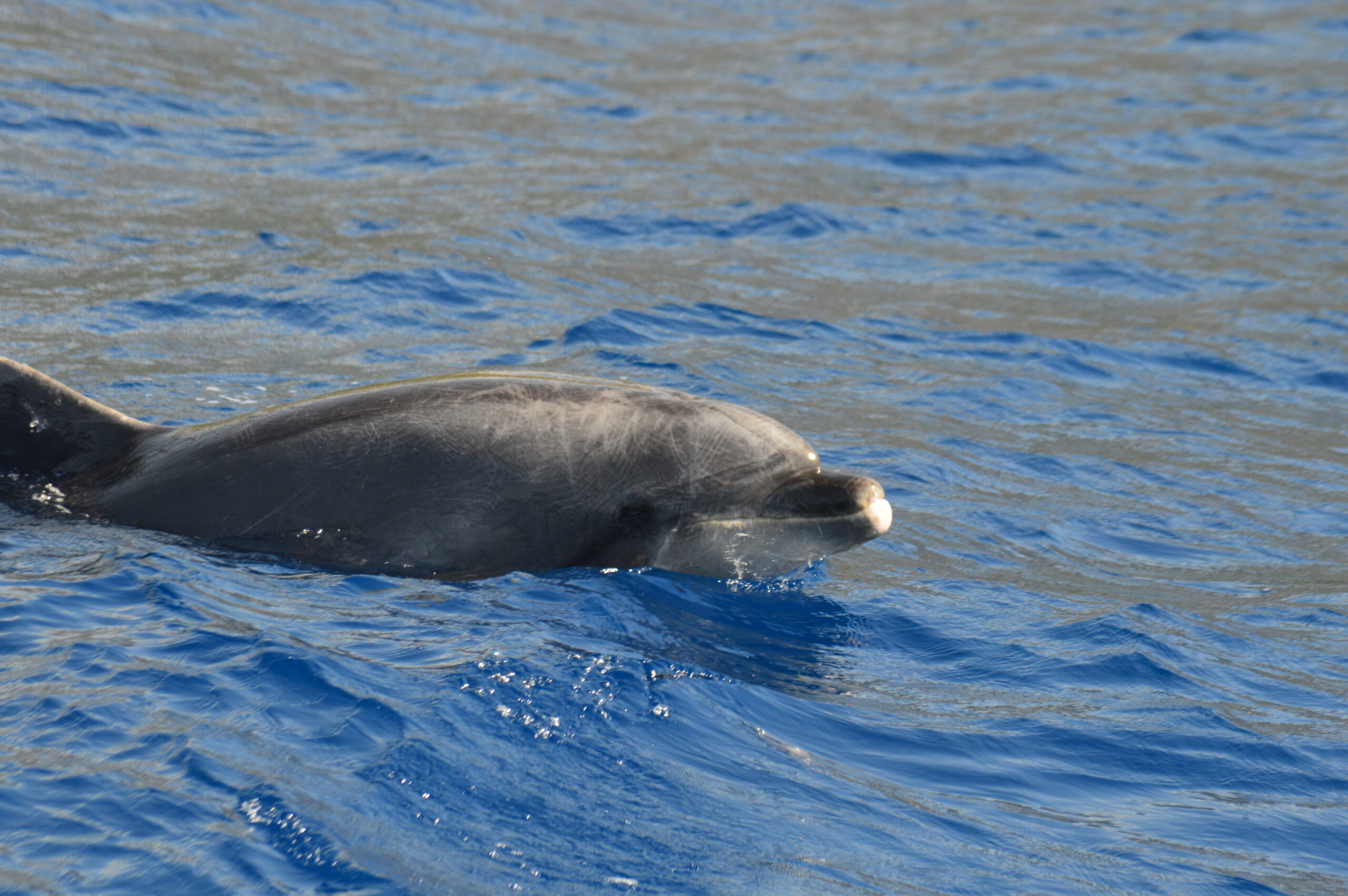
The bottlenose dolphin (Tursiops truncatus) is one of the most well-known and frequently observed marine mammals in the world. Recognized for its intelligence, social nature, and playful behavior, this dolphin species lives in warm and temperate oceans across the globe and is commonly seen around Madeira.
With On Tales whale watching and marine wildlife tours, guests have excellent opportunities to observe bottlenose dolphins in their natural environment while learning about their behavior and the importance of responsible ocean tourism.
Bottlenose dolphins are one of the few non-human animals known to recognize themselves in mirrors, a rare sign of self-awareness and advanced cognition.
The bottlenose dolphin is a medium-sized dolphin belonging to the family Delphinidae. It is easily identified by its robust body, curved dorsal fin, and short, bottle-shaped snout. This species thrives in a wide range of habitats, from shallow coastal waters to offshore regions.
Bottlenose dolphins are known for their adaptability, advanced communication skills, and strong social bonds within pods.
| Feature | Information |
|---|---|
| Scientific name | Tursiops truncatus |
| Common name | Bottlenose dolphin |
| Average length | 2.5–3.8 meters |
| Average weight | 150–650 kg |
| Lifespan | Up to 40–50 years |
| Diet | Fish, squid, crustaceans |
| Habitat | Coastal and offshore waters |
| Social structure | Pods of several to dozens of individuals |
| Conservation status | Least Concern (globally) |
Their intelligence and curiosity sometimes lead them to approach boats, which makes them one of the most commonly seen dolphins during whale watching tours.
The waters surrounding Madeira are an important habitat for bottlenose dolphins. Thanks to the island’s deep offshore waters and rich food supply, dolphins can be seen year-round.
On Tales offers responsible whale watching tours that follow strict guidelines to protect marine wildlife. These tours provide the chance to observe dolphins, whales, turtles, and other species while respecting their natural behavior.
Observing dolphins in the wild should always be done responsibly. On Tales follows ethical whale watching practices to ensure minimal disturbance and maximum respect for marine life.
By choosing responsible tours, you support conservation, education, and sustainable marine tourism.
Book your whale watching tour with On Tales!
As predators near the top of the marine food chain, bottlenose dolphins help maintain balance within ocean ecosystems. They are also key indicator species, meaning their health reflects the overall condition of the marine environment.
Protecting dolphins and their habitat is essential for healthy oceans.
Yes. Bottlenose dolphins are among the most frequently sighted species on whale watching tours around Madeira. However, sightings are never guaranteed, as dolphins are wild animals.
No. Bottlenose dolphins are generally not aggressive toward humans. It is important to observe them from a respectful distance and never attempt to touch or feed them.
Their diet consists mainly of fish and squid. They often hunt cooperatively, using teamwork to capture prey.
In the wild, bottlenose dolphins can live up to 40–50 years, depending on environmental conditions and threats.
They have large brains relative to body size, complex social structures, and advanced communication abilities, which contribute to their high intelligence.