What Makes the Loggerhead Sea Turtle Unique?
Large Head & Powerful Jaws
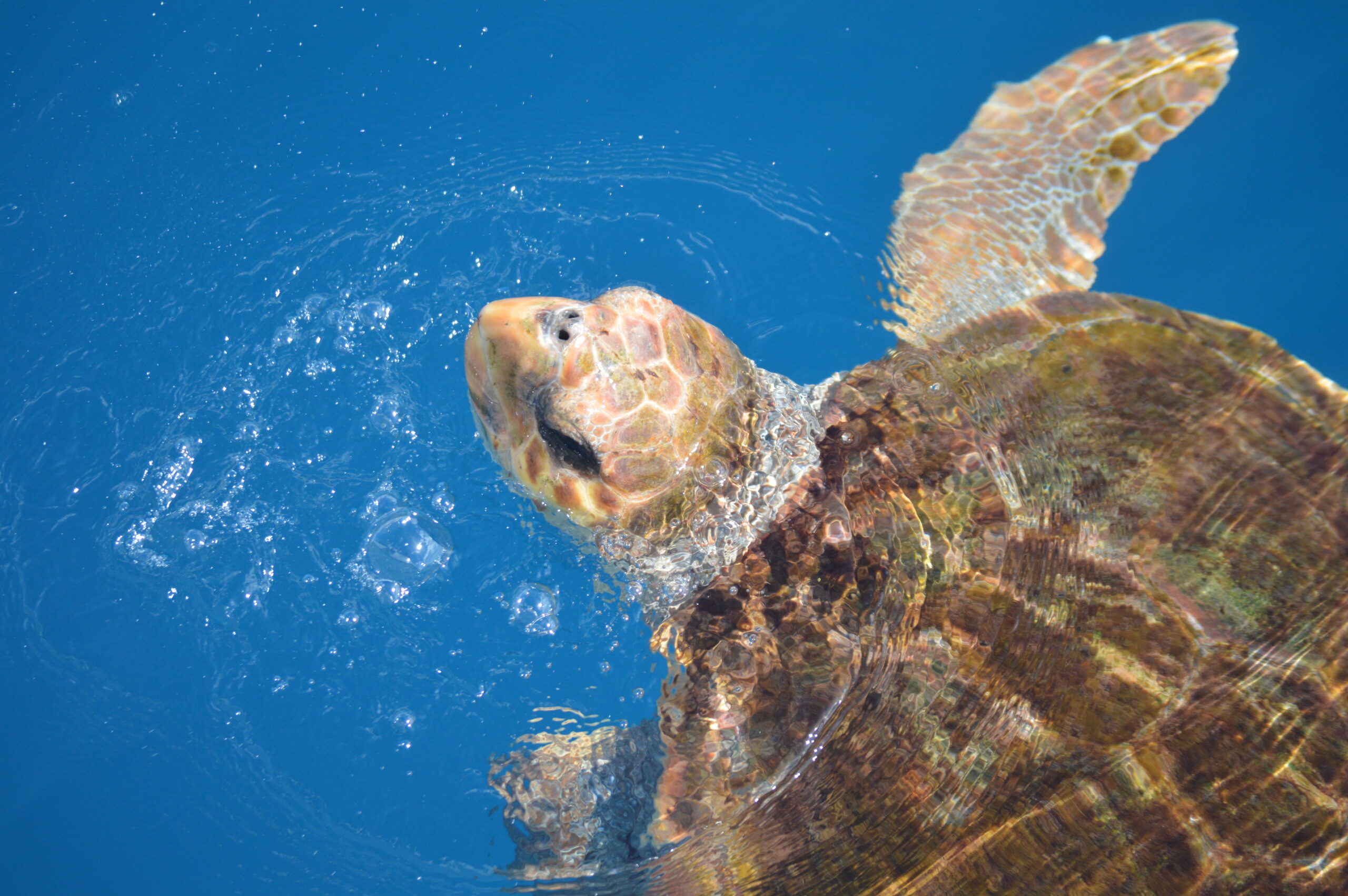
Their oversized head — the reason for the name “loggerhead” — houses incredibly strong jaw muscles. This allows Loggerheads to crush hard prey such as clams, mussels and crabs.
Size & Lifespan
Loggerhead turtles vary in size depending on age:
- Juveniles near Madeira: 15.5–72.2 cm carapace length
- Adults: up to 1.2 meters long
- Weight: up to 170–200 kg
- Lifespan: often 70+ years
The individuals seen around Madeira are typically adolescents that have crossed significant distances across the Atlantic.
Behavior
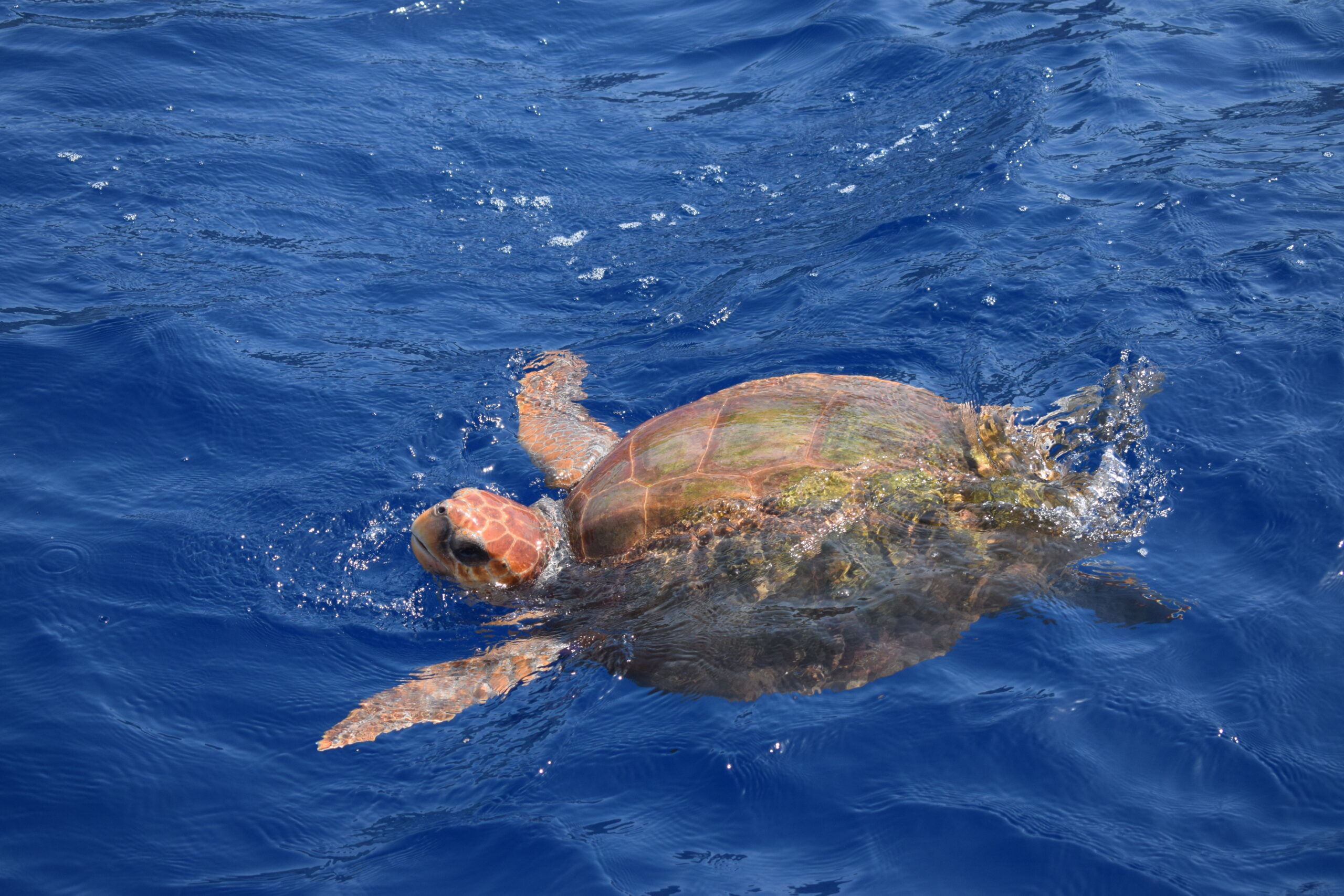
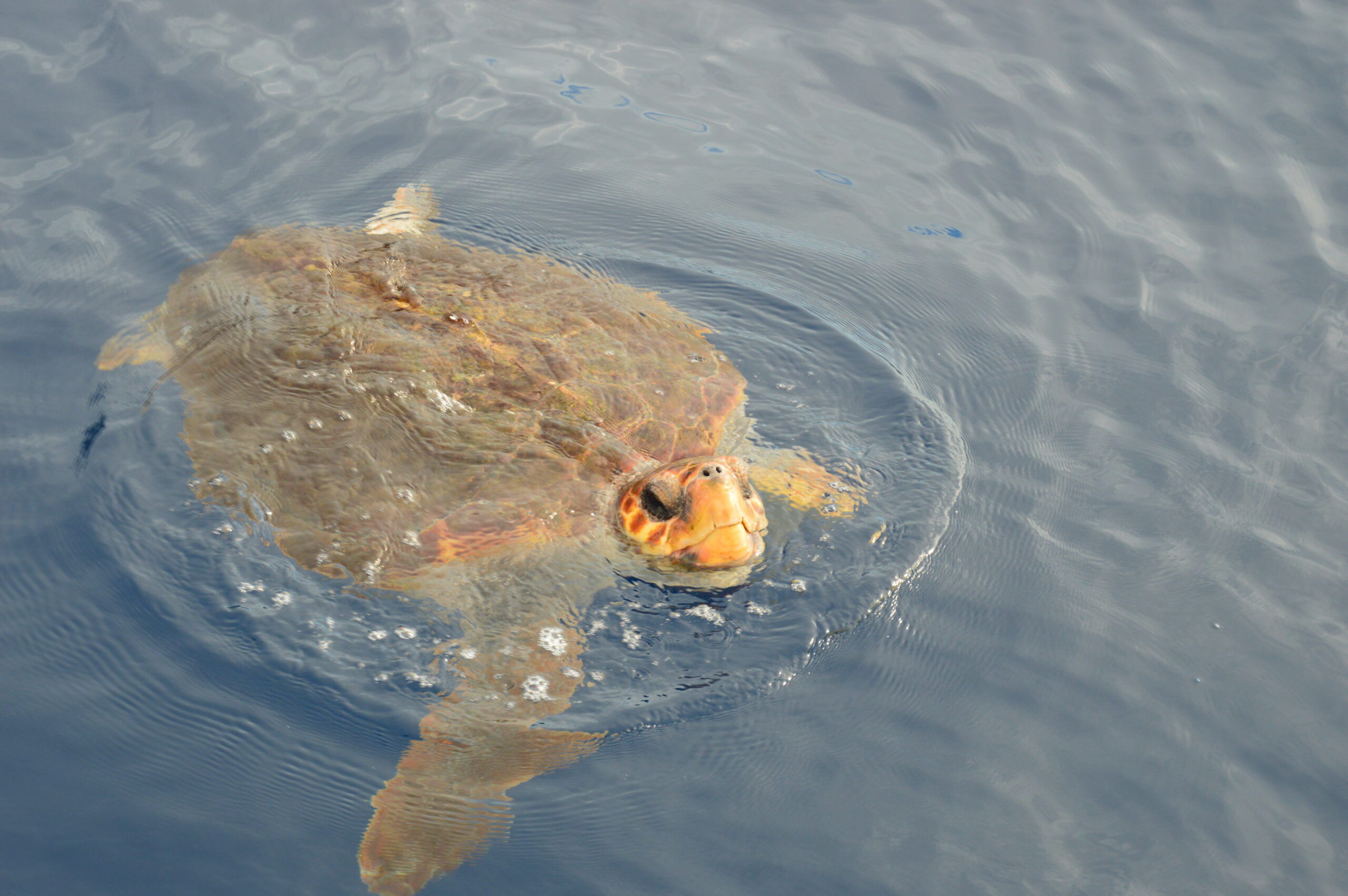
Loggerheads spend most of their lives offshore but surface frequently to breathe, warm themselves in the sun, or rest near calm waters. They are strong swimmers and capable of extraordinary long migrations.
Habitat & Migration of Loggerhead Sea Turtle (Caretta caretta)
Loggerhead turtles are distributed globally across:
- The Atlantic Ocean
- The Pacific Ocean
- The Indian Ocean
- The Mediterranean Sea
Hatchlings drift with warm ocean currents and rely on floating seaweed mats for shelter and food. As adults, females return to their birth beaches to lay eggs — a behavior called philopatry, meaning “love of home.”
Some Loggerheads sighted in Madeira likely began life on beaches in Florida, Cape Verde, or the Caribbean before crossing the ocean.
Diet: What Do Loggerheads Eat?
Loggerheads are omnivores, but they specialize in hard-shelled prey:
- Crabs
- Clams
- Mussels
- Snails
- Jellyfish
- Occasionally squid or fish
Their powerful beak makes them one of the few sea turtle species able to crush heavy shells.
Reproduction & Life Cycle of Loggerhead Sea Turtle (Caretta caretta)
- Females nest every 2–3 years.
- They lay multiple clutches per season, averaging 100 eggs each.
- Incubation lasts 50–70 days.
- Sand temperature determines hatchling sex:
- Warmer sand → more females
- Cooler sand → more males
- Baby turtles face high mortality, with many falling prey to birds, fish or plastic pollution.
Threats to Loggerhead Sea Turtles
Unfortunately, Loggerheads are classified as Vulnerable and face major threats:
1. Bycatch
Accidental capture in fishing gear is one of the most common dangers.
2. Marine Pollution
Plastic bags resemble jellyfish, a favorite food, leading to accidental ingestion. Lost fishing gear also poses entanglement risks.
3. Coastal Development
Tourism and construction near beaches disrupt nesting habitats.
4. Boat Strikes
Loggerheads surface often, making collisions with vessels a significant threat around coastal areas.
5. Climate Change
Rising sand temperatures affect hatchling sex ratios and threaten future populations.
Loggerhead Sea Turtles in Madeira
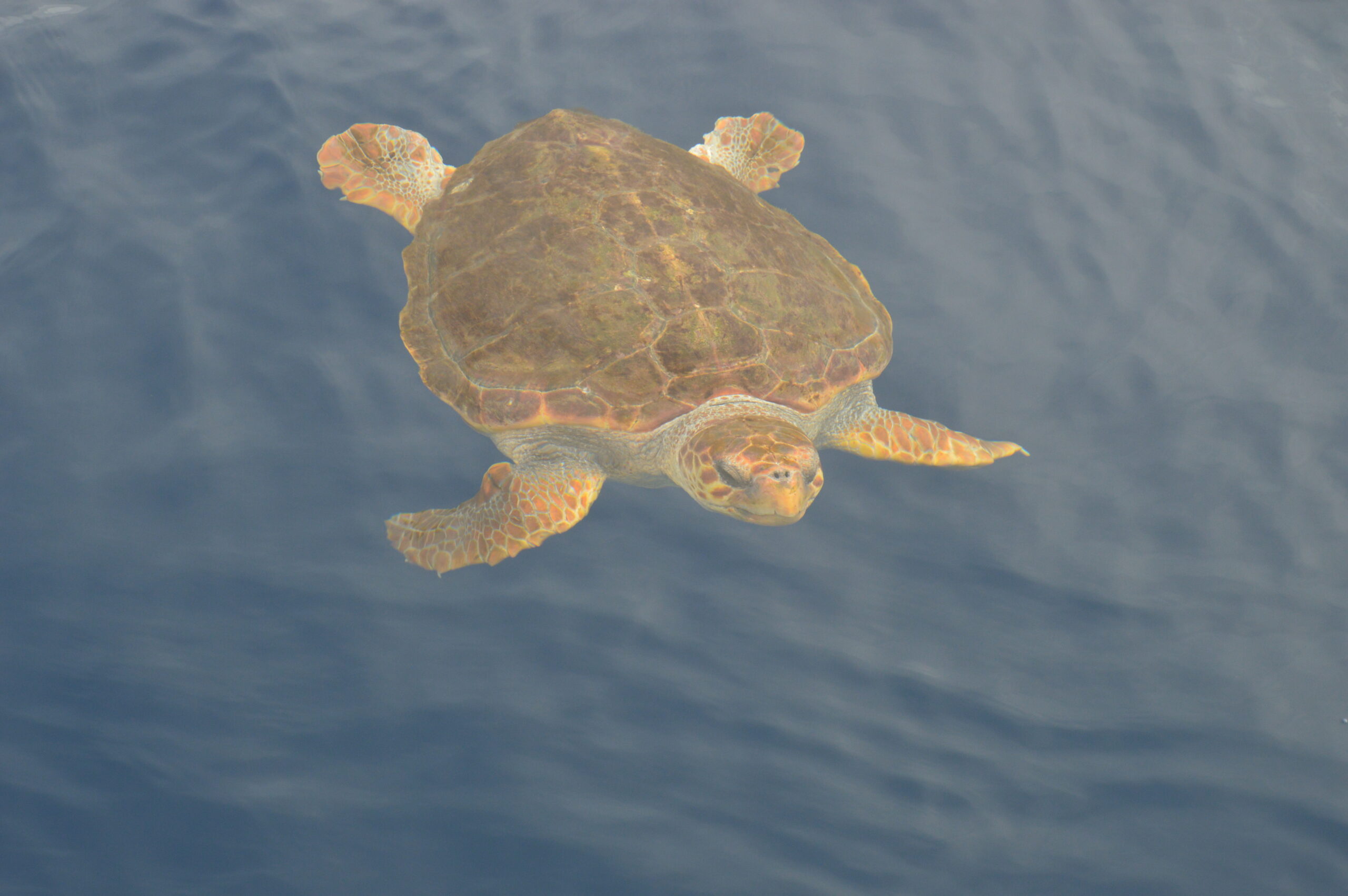
The waters around Madeira Island offer ideal conditions for juvenile Loggerheads. Warm currents, abundant food sources and low predator pressure make these waters an important developmental habitat. This makes Madeira one of the best places in the Atlantic to observe Loggerhead turtles responsibly and sustainably. Loggerhead Sea Turtles live in Madeira for 15 to 30 years. The Loggerhead Sea Turtle is one of the most extraordinary marine animals found in Madeira’s waters. Whether resting near the surface or gliding gracefully below, these turtles offer moments of real connection with nature. These lovely animals are marine reptiles. When they reach Madeira Island, we know that they have crossed the Atlantic Ocean from the coast of the American continent. They were born either in Florida or on the coast of Mexico. They swim to Madeira when they reach 1 year old. Only when over 15 to 30 years old do they decide to go back to the american coastline to spend their last days. Juvenile turtles usually range from 15.5 cm to 72.2 cm. Adult ones can grow to more than one meter long ! The head is large in relation to the size of the body. They stay in the water for long periods to warm up with the sunlight.
When do Loggerhead turtles hatch?
Hatching is the process when a baby animal emerges from its egg. Hatchlings usually emerge from the sand 50–70 days after eggs are laid, depending on temperature:
Most hatching occurs at night to avoid predators.
Spotting Loggerheads on OnTales Tours
If you have ever wondered: what does a loggerhead sea turtle look like? Join us on one of our Tours. During OnTales whale watching tours in Madeira, Loggerhead turtles are one of the most frequently sighted marine species.
OnTales follows strict ethical guidelines to ensure wildlife is observed respectfully — keeping animals safe while allowing guests unforgettable close-to-nature experiences.
Seeing a Loggerhead glide peacefully through crystal-clear waters is often a highlight for visitors.
Other Species You Can Discover on OnTales Tours
Madeira’s waters are rich in biodiversity. Here are more marine species you may encounter (all linking to OnTales species pages):
These species make Madeira one of the most exciting wildlife regions in Europe.
FAQ — Loggerhead Sea Turtles
Are Loggerhead turtles dangerous?
No. They are gentle and not aggressive toward humans.
Can you swim with Loggerhead turtles in Madeira?
Swimming is not recommended. Responsible observation from a boat keeps turtles safe and stress-free.
When is the best time to see Loggerheads in Madeira?
Loggerheads can be seen year-round, but sightings increase during warmer months.
Why do young Loggerheads come to Madeira?
Madeira’s waters offer ideal feeding grounds and safe environments for young turtles to grow.
How fast can a Loggerhead turtle swim?
They typically cruise at 1–2 km/h but can burst up to 30 km/h when threatened.
Can turtles breathe underwater?
No — turtles are air-breathing reptiles and must surface for oxygen. Some aquatic turtles can absorb small amounts of oxygen through their skin or cloaca, which helps them stay underwater longer, but they do not have gills like fish. So
How long can turtles live without food?
It depends on the species and age:
-
Healthy adult turtles: 6–12 weeks
-
Wild turtles during hibernation: several months
-
Baby turtles: only a few days
Pet turtles should never be deliberately starved, and clean water must always be available.
How long do turtles live?
Turtles are long-lived creatures:
-
Sea turtles: 50–100+ years
-
Tortoises: 80–150+ years (some even 200+)
-
Freshwater turtles: 20–40 years (up to 60 for some species)
Loggerhead sea turtles (Caretta caretta) often live 70+ years.